The First 4 Weeks: What Nobody Warns You About When Starting
Share
The prescription is filled. The first dose is done. You have read the official leaflet, which lists side effects in the same flat tone it lists storage instructions. What it does not tell you is what the first month actually feels like from the inside, day by day, in a real body with a real job and real dinner plans.
This is that guide. Not to scare you. The opposite: almost everything on this list is common, expected, and manageable, and knowing it is coming is half the battle.
Week one: the quiet before anything
Many people feel almost nothing in week one and immediately wonder if the medication is working. Starting doses are deliberately low. Your provider is easing your body in, not flooring the accelerator. Some people notice mild queasiness after eating, especially after larger or fattier meals. A few notice their appetite dimming already.
What helps now: use this calm week to build habits before you need them. Smaller plates. Eating slower. A water bottle that lives within arm's reach. If the habits exist before the side effects arrive, you will not be building them mid-storm.
Week two: the appetite shift gets real
This is often when people first experience the strange sensation of forgetting to eat. Meals you used to finish easily now feel like too much halfway through. This is the medication doing its job, but it comes with two side effects almost nobody anticipates.
You drink less without noticing. A lot of daily hydration rides along with meals and snacks. Fewer meals, fewer sips. Mild dehydration then quietly amplifies other symptoms: headaches, fatigue, dizziness, and nausea itself.
Nausea finds its pattern. For many people it peaks in the day or two after their weekly dose, then fades. Learning your personal pattern is genuinely useful: you can schedule lighter days, gentler meals, and lower expectations around your peak.
What helps now: small, frequent, bland-leaning meals. Cold or room-temperature food often sits better than hot food with strong smells. Ginger, in tea or chews, is a classic for a reason and has a long history of traditional use for occasional queasiness. And treat water like a scheduled task, not a feeling you wait for.
Week three: the slowdown downstairs
Somewhere around now, many people realize they have not gone to the bathroom in days. GLP-1 medications slow your entire digestive transit, and less food volume plus less water means less material moving more slowly. [1] The result is the constipation that dominates every GLP-1 forum on the internet.
What helps now: water first, always. Gentle, gel-forming soluble fiber rather than harsh bulking fiber, started at a low dose. Movement, even a fifteen-minute walk after dinner, gives your gut a mechanical nudge. Many people also look at their magnesium intake here. We wrote two full guides on this, one on the slowdown itself and one on choosing a magnesium form, because it is the single most common struggle on this journey.
Week four: the energy dip
By the end of the first month, some people describe a flatness. Not dramatic exhaustion, just less spark. Heavier mornings, an afternoon wall. Part of this is simply your body adapting to running on less fuel. Part of it can be nutritional: when total food intake drops, intake of B vitamins, vitamin D, and minerals drops with it unless you are deliberate about food quality, and low B12 intake in particular is a recognized contributor to fatigue. [2]
What helps now: protein at every meal, since it is the nutrient most worth protecting when portions shrink. Prioritizing nutrient-dense food over empty volume. Decent sleep, which the medication does not grant you automatically. And an honest look at whether your micronutrient intake needs backup.
The one-sentence version of month one: drink more than you think you need, eat smaller and slower than you are used to, keep things moving with the right fiber and minerals, and protect your protein.
When it is not just an adjustment
Call your healthcare provider if you experience severe or persistent vomiting, severe abdominal pain, signs of dehydration like dizziness and very dark urine, or anything that feels wrong beyond "uncomfortable." The first month has a learning curve, but you should never feel like you are in danger on it.
Built for exactly this month
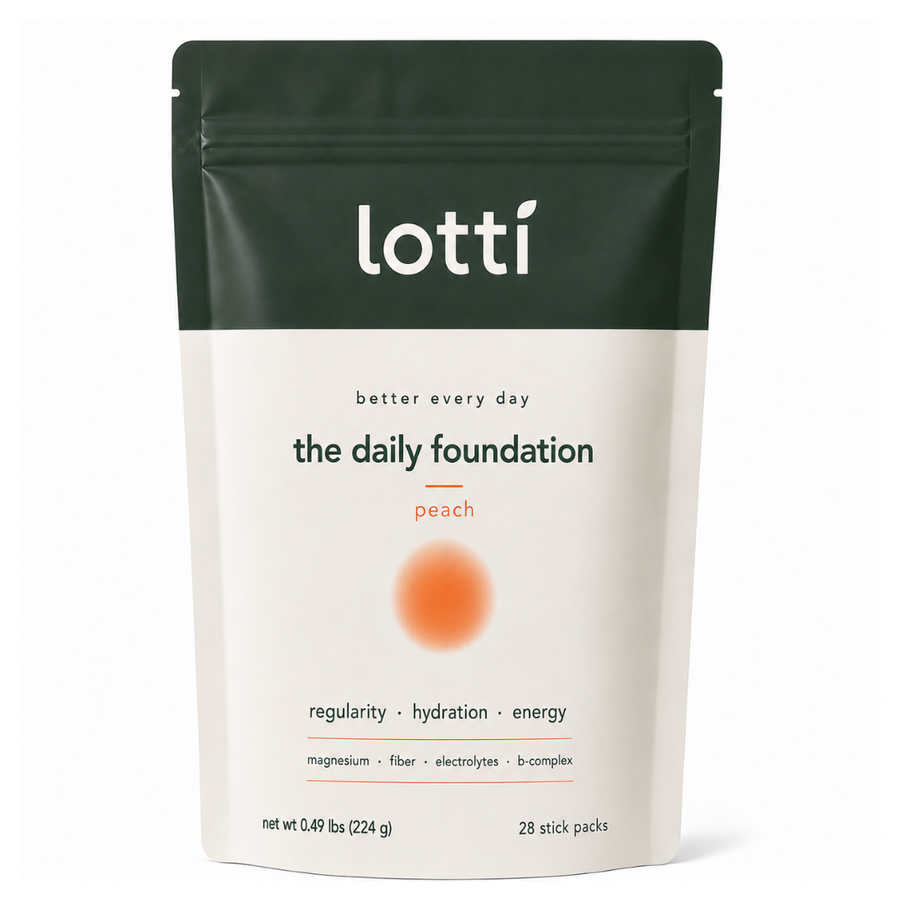
The Lotti Daily GLP-1 Companion was designed around the first-month experience: a stick with gel-forming fiber and electrolytes to handle the hydration and regularity side, and a capsule with magnesium, B vitamins, vitamin D3 with K2, and ginger root extract for the rest. One system, once a day, so you can spend your energy adjusting to your new normal instead of managing six separate bottles.
This article is for educational purposes only and is not medical advice. Always follow your healthcare provider's guidance about your medication and speak with them before starting any supplement.
*These statements have not been evaluated by the Food and Drug Administration. This product is not intended to diagnose, treat, cure, or prevent any disease.
Sources
- Jalleh RJ, et al. "Clinical Consequences of Delayed Gastric Emptying With GLP-1 Receptor Agonists and Tirzepatide." The Journal of Clinical Endocrinology & Metabolism, 2025. https://academic.oup.com/jcem/article/110/1/1/7824836
- National Institutes of Health, Office of Dietary Supplements. "Vitamin B12: Fact Sheet for Health Professionals." https://ods.od.nih.gov/factsheets/VitaminB12-HealthProfessional/