Magnesium Forms Explained: Why Glycinate Beats Oxide
Share
Flip over two magnesium bottles in any supplement aisle. Both say magnesium. Both show a similar-looking number of milligrams. One costs eight dollars, one costs twenty-four. Most people grab the cheap one and assume they made the smart choice.
Here is the uncomfortable truth: the word after "magnesium" on the label matters more than the number before it. Oxide, citrate, glycinate, threonate. These are not marketing flavors. They are different molecules that behave differently in your body, and on a GLP-1 journey, picking the wrong one is one of the fastest ways to trade one digestive problem for another.
There is even a twist in that big milligram number on the front. Magnesium is always bound to something else, and that partner molecule affects both how much elemental magnesium you get and how much your body absorbs. Oxide happens to carry a high percentage of elemental magnesium by weight, so its front-label number can look impressive, while the fraction your body actually takes up is low. The number that catches your eye and the number that reaches your cells are not the same number. [1]
Why magnesium matters more on a GLP-1 journey
Magnesium is involved in hundreds of processes in the body, including normal muscle function, nervous system function, energy metabolism, and the water balance in your bowel. When you are eating significantly less overall, which is the reality of a GLP-1 journey, your magnesium intake from food often drops right along with everything else. Leg cramps at night, restless sleep, sluggish digestion, and general flatness are all things people commonly report, and low magnesium intake can be part of that picture.
So supplementing makes sense for many people. The question is which form.
The forms, honestly ranked for this situation
Magnesium oxide: the one to check your label for
Oxide is the cheapest form to manufacture, which is why it dominates budget supplements and shows up quietly inside many multivitamins. Its weakness is absorption: in the most cited human comparison, the fraction of magnesium absorbed from oxide was only around four percent, several times lower than better-absorbed organic forms. [1] The rest stays in your gut, where it pulls in water and can act as a laxative.
For someone with normal digestion who wants occasional help going, that can even be useful. But it is a blunt instrument, and the line between "helpful" and "urgent bathroom situation" is thin. On a GLP-1 journey, where your gut is already unpredictable and where nausea may already be in the mix, surprise diarrhea is the last thing you need.
Magnesium citrate: better absorbed, still pushy
Citrate is a step up in absorption and is widely used. It still has a meaningful osmotic effect, meaning it draws water into the bowel. Some people on a GLP-1 journey use that deliberately for regularity. Others find it too aggressive. If you use citrate, dose carefully and pay attention to how your body responds.
Magnesium glycinate: the gentle workhorse
Glycinate is magnesium bound to glycine, an amino acid. It is well absorbed and notably gentle on the stomach, with far less of the laxative effect that oxide and citrate carry. That combination is exactly why it has become the form of choice for daily, long-term use, and why you will see informed buyers in GLP-1 communities specifically checking labels for it. You get the magnesium without gambling on your gut's reaction.
Magnesium L-threonate: the specialist
Threonate is a newer, more expensive form studied mainly for its ability to cross into the brain, and it is marketed around cognitive support. Interesting molecule, but for the everyday needs of a GLP-1 journey, glycinate covers the fundamentals at a saner price.
Label check in five seconds: find the word directly after "magnesium" in the ingredient list. If it says oxide and the brand is not upfront about why, that usually tells you the formula was built around cost, not around you.
The "proprietary blend" trap
One more thing to watch for. Some labels list "magnesium blend" or hide the forms inside a proprietary blend without disclosing how much of each form you are getting. A blend of mostly oxide with a sprinkle of glycinate can legally borrow the reputation of the good form while delivering the economics of the cheap one. A brand that is proud of its forms will name them, with amounts. A brand that is not will get vague.
How we handle magnesium at Lotti
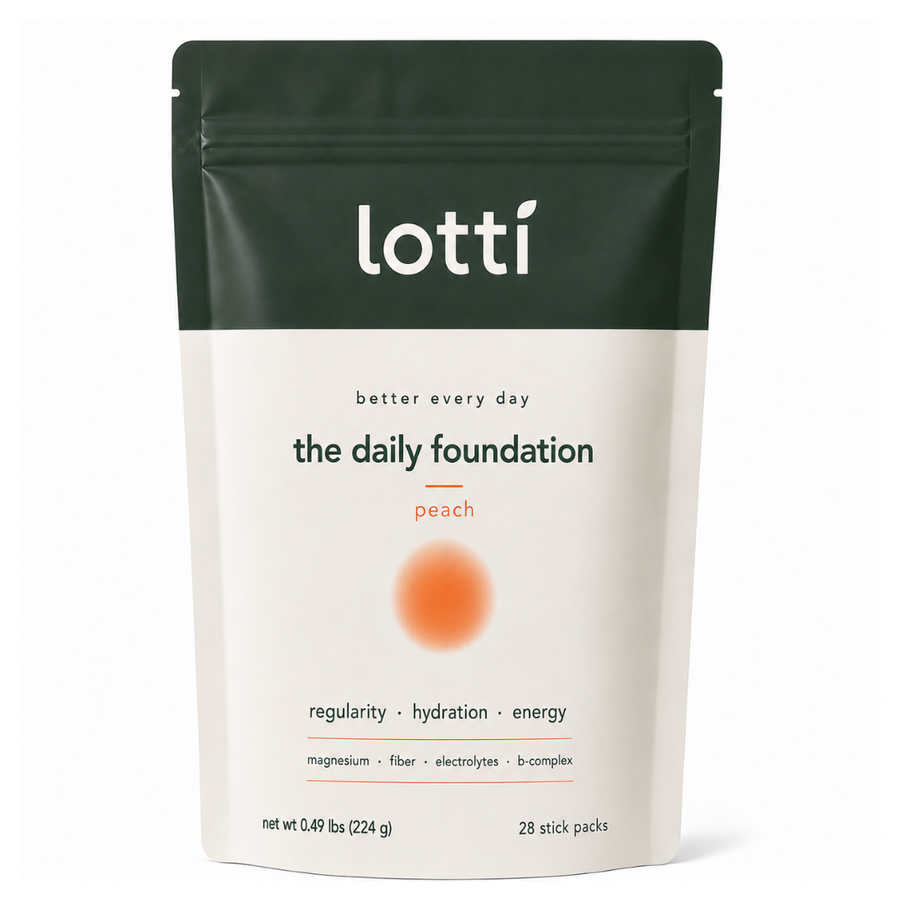
The Lotti Daily GLP-1 Companion uses a form chosen for absorption and gut-friendliness, at a clearly disclosed dose on the label, because our entire brand is built on the idea that you should never have to decode a supplement label like a detective. You can see exactly what is in the capsule and why each ingredient earns its place.
If you take one thing from this article, let it be this: next time someone tells you "magnesium did nothing for me" or "magnesium wrecked my stomach," ask them which form. Nine times out of ten, that is the whole story.
This article is for educational purposes only and is not medical advice. Always consult your healthcare provider about symptoms and before starting any supplement, especially if you have kidney issues or take other medications.
*These statements have not been evaluated by the Food and Drug Administration. This product is not intended to diagnose, treat, cure, or prevent any disease.
Sources
- Firoz M, Graber M. "Bioavailability of US commercial magnesium preparations." Magnesium Research, 2001. https://pubmed.ncbi.nlm.nih.gov/11794633/
- National Institutes of Health, Office of Dietary Supplements. "Magnesium: Fact Sheet for Health Professionals." https://ods.od.nih.gov/factsheets/Magnesium-HealthProfessional/